

This guide contains affiliate links; we may earn a commission at no extra cost to you.
To do a cold plunge at home, fill a tub with cold water at about 50 to 59°F (10 to 15°C), which is the beginner starting range. Confirm it with a thermometer, and stay in for a minute or two. Cleveland Clinic says never to go below 40°F (4°C) or stay past five minutes.
Skip it or ask your doctor first if you have:
- A heart condition or a heart rhythm disorder
- High blood pressure
- Raynaud’s disease
- A pregnancy
Last updated: October 2026
What is a cold plunge?
Cleveland Clinic describes a cold plunge as a dip into an icy bath. It says a tub of cold tap water can be cold enough for some goals. Some people add a few large bags of ice to go colder. You’ll also hear it called cold-water immersion or cold therapy.
Key takeaway: your first plunge needs only a tub, cold water and a thermometer.
How do you do a cold plunge at home?
What you need
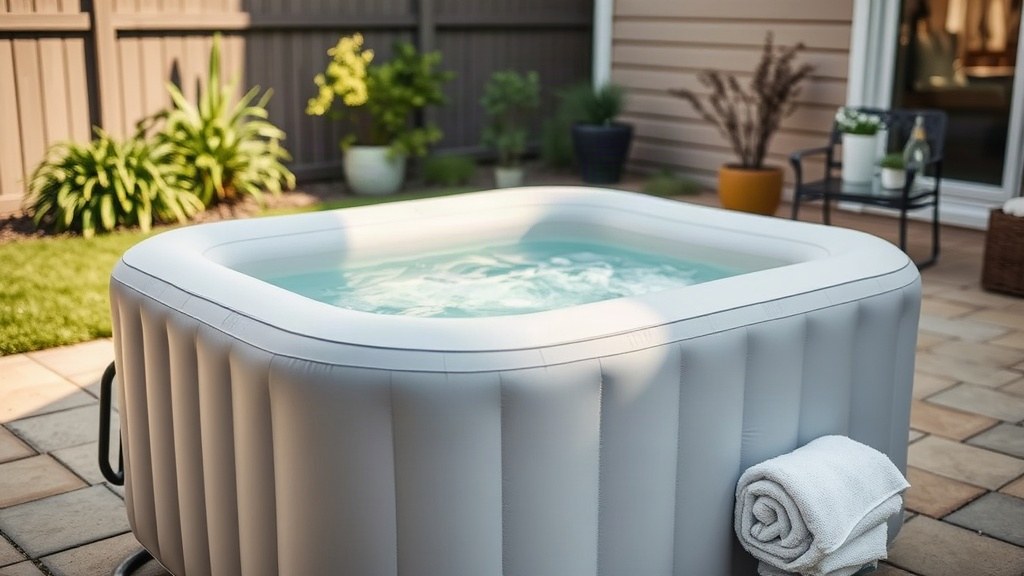
- A tub: your bathtub, or a cold plunge tub
- Cold water, plus bagged ice if needed
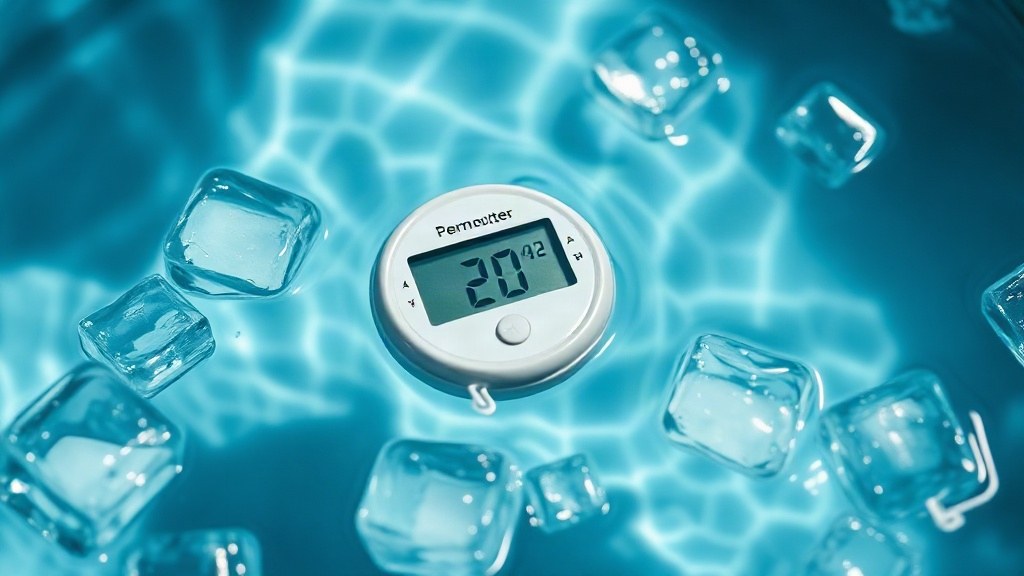
- A floating waterproof digital pool thermometer
- A non-slip bath mat so you don’t slip getting in or out
- A waterproof timer to keep you under the limit
- A towel and a thermal robe or other warm, dry clothes
Steps
- Check with your doctor if you have any health condition. See the safety section below.
- Choose your setup. Start with your bathtub. If you want something dedicated, try a portable or inflatable cold plunge tub.
- Use a thermometer. A floating waterproof digital pool thermometer lets you confirm the water is between 50 and 59°F before you step in. Add ice a little at a time and re-check.
- Get in slowly on a non-slip mat, keep your head out of the water, and start your timer. Stay one or two minutes at first.
- Get out if you feel discomfort. Then dry off right away and put on warm, dry clothes.
Many people pair cold with heat. If you’re curious about the warm side, see our sauna guides. New here? Start with our Start Here page.
Which cold plunge setup is right for you?
Here are real options, from cheapest to most advanced. Specs and prices come from the seller pages linked in Sources, and we haven’t tested any of them. Prices change, so check the listing. The Amazon links here are affiliate links. The Rogue Fitness and Plunge links go to the sellers and aren’t paid links.
| Setup | Example | Key specs | Watch out for |
|---|---|---|---|
| DIY | Your bathtub plus bagged ice | Uses what you own | Your tub may not cover your shoulders |
| Budget | B&Y portable ice bath tub | 90 gallons, six insulating layers, foldable (per the Amazon listing) | No chiller, so you still add ice |
| Mid-range | Ice Barrel 400 at Rogue, or search Amazon | 105 gallons, 31 in wide, 41 in tall, 55 lb empty, upright design, listed at $999.99 on Rogue | No built-in chiller, so you add ice |
| Premium | The Plunge Original | 105 gallons, 66.6 x 31.5 x 26 in, 144 lb empty, fits people up to 6 ft 8 in, listed at $6,790 on plunge.com | The chiller can reach 37°F per plunge.com, but don’t set it below 40°F |
Which one fits you?
- If you just want to try it, use your bathtub and bagged ice.
- If you have a garage or patio and a small budget, look at a portable tub like the B&Y.
- If you want an upright tub for a deck or yard, look at the Ice Barrel 400.
- If you plunge often and want steady temperature without ice, look at a chiller tub like The Plunge Original.
Key takeaway: start with the bathtub, and buy a tub only after you know you’ll keep going.
What water temperature should you use?
Cleveland Clinic gives a safe starting range of 50 to 59°F (10 to 15°C) and says to use a thermometer to make sure you’re in a safe zone.
| Level | Water temperature | Source |
|---|---|---|
| Beginner | 50 to 59°F (10 to 15°C) | Cleveland Clinic |
| Floor for everyone | Not below 40°F (4°C) | Cleveland Clinic |
Key takeaway: beginners should stay at 50 to 59°F, and nobody should go under 40°F.
How long should you cold plunge?
Cleveland Clinic says a session should never go longer than five minutes. Beginners should limit sessions to a minute or two.
Key takeaway: five minutes is the hard cap, and one or two minutes is plenty at first.
Common mistakes beginners make
- Going below the beginner range. 50 to 59°F is the starting range, and 40°F is the absolute floor. Check the water with your thermometer in step 3, and add ice slowly.
- Staying past five minutes. Set a timer before you get in.
- Guessing the temperature. Water that feels fine can be colder than you think, so always measure.
- Plunging right after heavy lifting. If muscle growth is your goal, wait. See the lifting section below.
- Ignoring discomfort. Get out at the first stop sign listed in the safety section.
Is a cold plunge safe? Who should avoid it
Cleveland Clinic says cold plunges may be risky if you have certain medical conditions. Talk to your doctor first, especially with a heart or blood pressure issue, or if you’re pregnant. It also lists hypothermia as a risk of long exposure, with shivering, confusion and, in extreme cases, unconsciousness.
Harvard Health says people with heart rhythm disorders should be cautious, because cold water on the skin and an adrenaline surge may trigger an underlying arrhythmia. UPMC says people with Raynaud’s disease can have attacks even from short ice baths.
What is cold shock?
Cold water triggers a reflex. A review in the journal Physiology says cold shock includes gasping and fast breathing, and that it peaks in the first 30 seconds of immersion. Renown Health notes that if your head goes under during the gasp, you could breathe in water.
Safety rules:
- Keep your head above water and breathe slowly through the first minute.
- Don’t plunge alone, and skip it after alcohol.
- Set up so you can’t slip or fall getting in and out, and never use water deep enough to be a drowning risk.
- Stay under five minutes, and never go below 40°F.
- Stop signs: get out right away for chest pain, dizziness, confusion, numbness, pain, or shivering you can’t control.
What are the cold plunge benefits?
Some people use a plunge to ease sore muscles. Mayo Clinic Health System says research has found that cold-water immersion helps reduce exercise-induced muscle damage, which means less inflammation and soreness.
People also try it for stress and sleep. Harvard Health covers a 2025 PLOS One analysis of 11 studies and 3,177 people. It found regular ice baths or cold showers may help reduce stress and improve sleep, though Harvard calls the research limited.
Key takeaway: the benefits are possible, not guaranteed.
Should you cold plunge after lifting weights?
Key takeaway: if building muscle is your goal, skip the plunge right after lifting. Cleveland Clinic says a plunge within four hours of a muscle-building workout may work against your gains. It says a plunge may still help on rest days between workouts.
A 2015 study in The Journal of Physiology (Roberts and colleagues) compared cold-water immersion with active recovery over 12 weeks of strength training. Cold-water immersion reduced long-term gains in muscle mass and strength. It also blunted key muscle-building signals for up to two days after a session.
A later study in the Journal of Applied Physiology found that cold-water immersion blunted muscle fiber growth after resistance training, but not maximal strength. So the evidence isn’t identical across studies. For more on recovery tools, browse our recovery gear guides.
FAQ
How often should you cold plunge?
Cleveland Clinic says beginners should plunge only once or twice a week. As you get used to the shock, you can add days. Check with your doctor if you have a health condition, and keep every session under five minutes.
Is it safe to cold plunge every day?
Cleveland Clinic says some people can tolerate a daily plunge, but it’s not where beginners should start. Build up slowly, keep sessions short, and talk to your doctor first if you have a heart or blood pressure issue.
Is a cold plunge the same as an ice bath?
They’re very close. Cleveland Clinic describes a cold plunge as a dip into an icy bath, and says it may also be called cold therapy or cold-water immersion.
Is a cold plunge the same as a cold shower?
Not quite. A plunge puts your body in cold water, while a shower sprays it on you. Harvard Health’s coverage of the 2025 PLOS One analysis looked at ice baths and cold showers together, so both have been studied.
What is the best cold plunge temperature for beginners?
Cleveland Clinic says 50 to 59°F (10 to 15°C) is a safe starting range. Don’t go below 40°F (4°C).
Does a cold plunge help muscle soreness?
It may. Mayo Clinic Health System says research shows cold-water immersion can reduce exercise-induced muscle damage and soreness.
Note: This article is general information, not medical advice.
Sources
- Cleveland Clinic: Are Cold Plunge Ice Baths Good for You?
- Mayo Clinic Health System: Cold-water plunging health benefits
- Harvard Health: Research highlights health benefits from cold-water immersions
- Harvard Health: Cold-water dips, healthy or risky?
- UPMC: What are the health risks of ice baths?
- Physiology: review on cold shock and immersion
- Renown Health: What you need to know about cold water drowning
- The Journal of Physiology (2015): Post-exercise cold water immersion and strength training adaptations
- Journal of Applied Physiology: Cold water immersion and resistance training
- Amazon: B&Y portable ice bath tub listing
- Rogue Fitness: Ice Barrel 400
- Plunge: The Plunge Original product page